The Vision
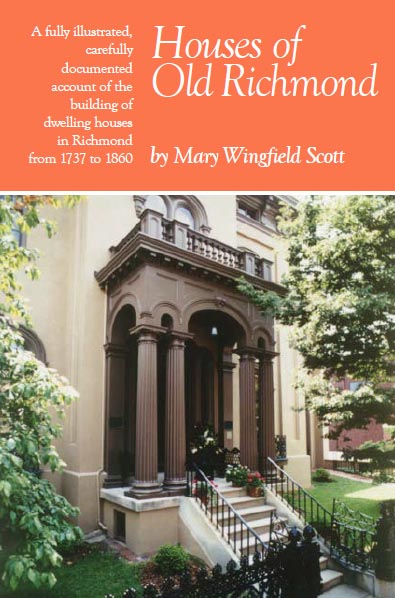
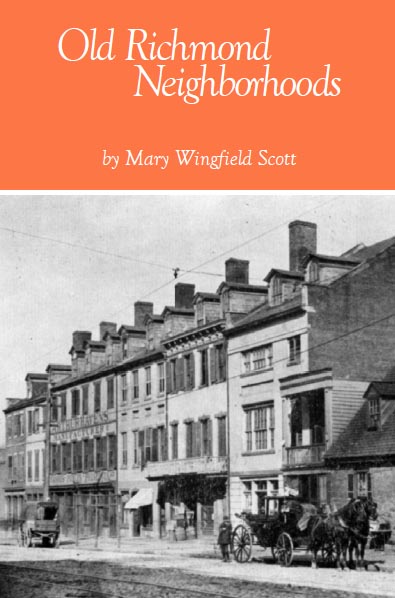
Mary Wingfield Scott published Houses of Old Richmond in 1941 and Old Richmond Neighborhoods in 1950 and these books are still the bibles of Richmond architectural history.
In 2011 we published Winkie including some of her previously unpublished writings and other articles about her. This was a private printing and distributed to a limited number of people.
In January 2012, Apple announced their iBooks, with iBooks Author to create interactive books and their iBookstore to offer these for iPad users. The iBooks allow anyone to create beautiful Multi-Touch books, with photo galleries, videos, interactive displays and more. These books bring content to life in ways the printed page never could.
Our vision for ‘Project Winkie’ as we are calling it, is to move all three of these books into iBooks and offer them for free on line. This is strictly a labor of love. and we want to bring Winkie and her books to life and to have people all over the world read this.
The first step is to scan the books to get the text and photographs into a digital form that we can use for the books. However, these are not books in the traditional sense. We have recordings of Winkie reading Diddie, Dumps & Tot, and Uncle Remus. In Winkie, she mentioned watching Mountain Top burn in 1903. This was a hotel on Afton Mountain, and nobody seemed to have any photos. There was an engraving which we located. And then Kate Roy Christian mentioned that she had a lot of photographs. It was owned by her family. There were a lot of photos and we included two photos in Winkie, but we can now put them all in the Winkie iBook as a photo gallery that you can navigate through with the swipe of a finger. We have many photos of Winkie and also movies of her at family reunions. We have recordings of Elizabeth Bocock talking with her brothers and sisters. All these and more will go into the iBook.
Also we want to make a link of this history with the present and to make it more interesting. The printed books were limited to the photographs that could be printed, and there are over 500 photos in the Valentine Museum from Heustis B. Cook, and only a small fraction of these were included in these books. There are also many family photos of people who lived in the houses, and with these digital books, we can let the reader 'visit' the houses, learn about the people who lived there and see photos of them. While many of the houses have been demolished, Winkie was a pioneer in promoting the historic preservation and restoration of historic houses. We would like to include modern updates to what has happened to the buildings -- for example, the Pohlig Box Factory has been converted to apartments and is now a vibrant, living building. We want to include all those stories as well.
If you watch the presentation of iBooks, it is easy to see where all this might go. I've had the experience of creating two major pieces of software, WildTools for PowerCADD and Benchmark for aircraft performance testing and analysis. Whenever I have gotten started on a project like this, I try to get as many talented people as possible involved -- I think of it as putting fertilizer on a brain farm -- and over time the project takes on a life of its own, and it ends up going far beyond your wildest imagination at the beginning. I'm sure this is going to happen with Project Winkie, and I look forward to getting as many people involved as possible. Let's everyone chip in and see what we can create.
When Apple first announced iBooks, iBooks Author and the iBookstore, I was immediately enthralled and excited about the possibilities, and with this fire in my belly, started work on the project.
Since then, I have cooled on it for a number of reasons.
I've always liked the Bill Gates quote that "the advantage of youth is that they don't have the benefit of experience." So young people are always charging off in a direction, not knowing what obstacles lie in front of them, and every now and then one of them pulls off something really spectacular, while many thousands of them put a lot of effort into things that come to nothing.
You've all heard the statistics from Apple's iTunes music store and their AppStore for iPhone and iPad apps, and the enormous amounts of money paid to music publishers and software developers.
However, in the AppStore somewhere between 65 and 90% of apps do not even break even, and among the 700,000 apps I've seen statistics that there are about 400,000 apps in the AppStore that nobody downloads.
We have Peter Stanley's music in the iTunes music store, and I'm glad we do, but it is just a little more than a break-even affair, pulling in maybe $30 a month which covers the cost of getting the music in the store but that's all.
So I think that getting a book into the iBookstore is like getting a half-inch of shelf space in a big box store like WalMart. It's all too likely that it will not be noticed at all, and the only way to get it noticed is to be promoting the book all the time. Steve Mouzon has a book published by McGraw-Hill that is consistently in the best seller lists on Amazon. He's out giving speeches all the time, so he's promoting the book all the time.
I've also cooled off on the multimedia elements of iBooks. It sounds great when you first see it, but I've now read a few books on the iPad and I like the ones that look and feel like a normal book. I find the interactive features to be gimmicky and gratuitous, and these just turn me off. Web pages and digital publications are filled with things that dance in front of you, and it doesn't take long to become disenchanted with these and want to curl up with a good book.
I'm also worried about how to produce a digital copy of the books that are superior and more useful than the printed books. The digital copies of these books should be more useful than the printed book and that's possible by providing links so you can tap on an index entry and go to that section of the book. I know how to do that with the books I've published, but I'm worried about the complexities of doing this in an iBook or on a website. These are serious scholarly works, and we want to have a complete index so you'll have a better and more useful copy of Winkie's books on your iPad.
So I'm scaling back on my ambitions on these books, and for now at least, I'm going to concentrate on putting the books into a 6x9 paperback format like we used for the Winkie book. We can put these on the Historic Richmond Foundation website, the Valentine Museum's website and anywhere else they might belong. It will be easy to get them set up with a print-on-demand service so you can order printed copies on Amazon or other services like that.
Part of my vision for this would be to tell more of the history of the buildings. These books were printed in 1941 and 1950 and they are the history of the buildings up to that point. But many of the buildings have been restored or put to other uses, such as the Bolling-Haxall house, the Pohlig factory, etc. We can still do that, and I think we should. We can provide a Postscript section for each house where we can tell the story of the changes since the book was published and links to websites. These will clearly be additions to the original book and will be respectful of the original book while adding to the history.